
Health & Heaven
Designing for Trust in Medical Tourism
From generative research to a shipped trust-first website (FAQ + Patient Guide + content system)
Executive Summary
Context: An early-stage medical-tourism brand in Turkey with no UX practice, no clear positioning, and no roadmap needed a trust-first plan.
Gaps: unknown user needs across segments, scattered decisions, a weak value proposition, and manual processes. I built Health & Heaven end-to-end—research, archetypes, market positioning, brand, IA, and design direction. Through 14 in-depth interviews and AI-assisted synthesis, I defined five behavioral archetypes (Appearance-Conscious Professional, Budget-Conscious Seeker, Health-Seeking Retiree, Specialized Treatment Seeker, Cosmetic Tourism Enthusiast), mapped the full journey (pre-travel → treatment → recovery), benchmarked services and pricing vs. the US, and translated insights into an agile, phased, trust-led roadmap focused on surfacing motivations/risks/decision criteria, positioning credibly, and aligning offering, content, and ops.
Role: UX Researcher & Strategist (solo)
Scope: Research → Strategy → Brand → IA → Web direction
Methods: IDIs (n=14), archetypes (not personas), journey mapping, pricing scan, MoSCoW, Eisenhower, agile sprints
Tools: Notion, Figma, Google Suite, AI (analysis/benchmarking support)
Research Questions
01
How to position services & pricing vs. the US?
02
What convinces or scares international patients?
03
What are actionable behavioral segmentation?
04
What tone, typography, and evidence communicate trust without over-promising?
My Approach
Discovery: 14 semi-structured interviews (young professionals, retirees, wellness entrepreneurs, first-timers); desk/regulatory and competitor scan to surface top questions and red flags.
Modeling: Audience snapshots & JTBD; a trust-first content model (Guide, FAQ, proof/credential modules, policies); site IA from scratch.
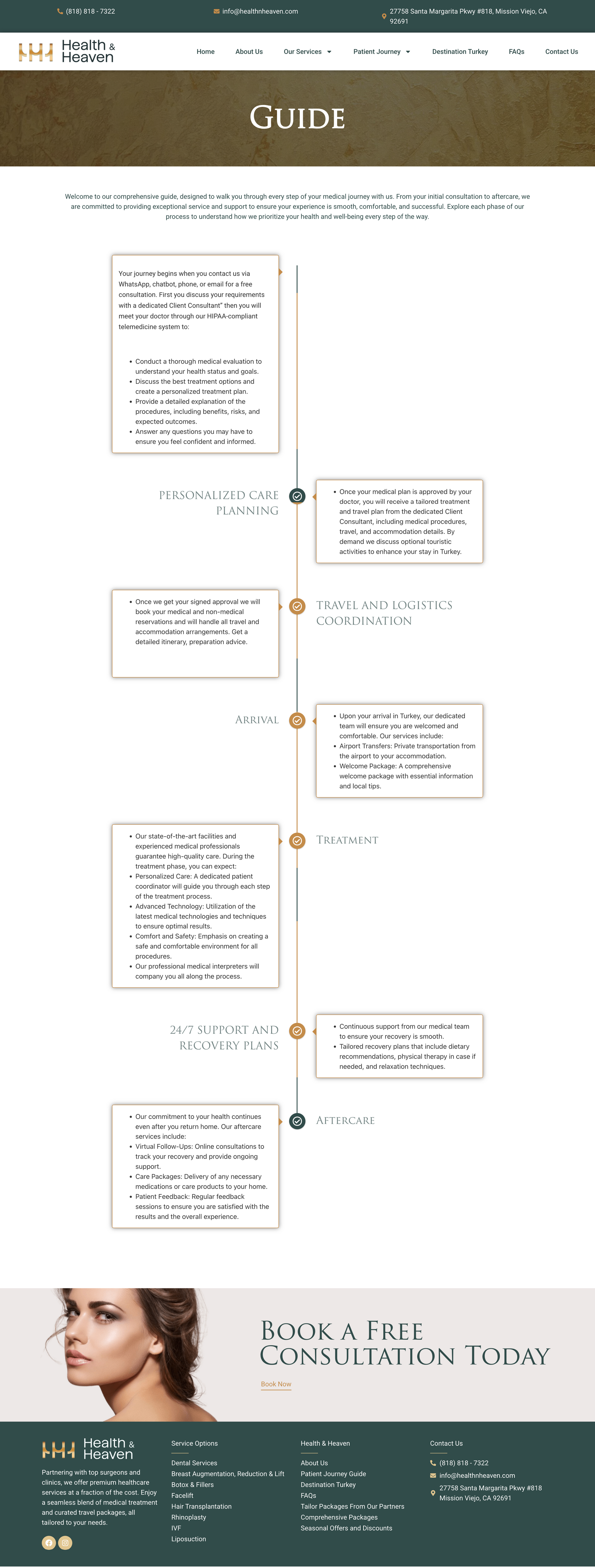
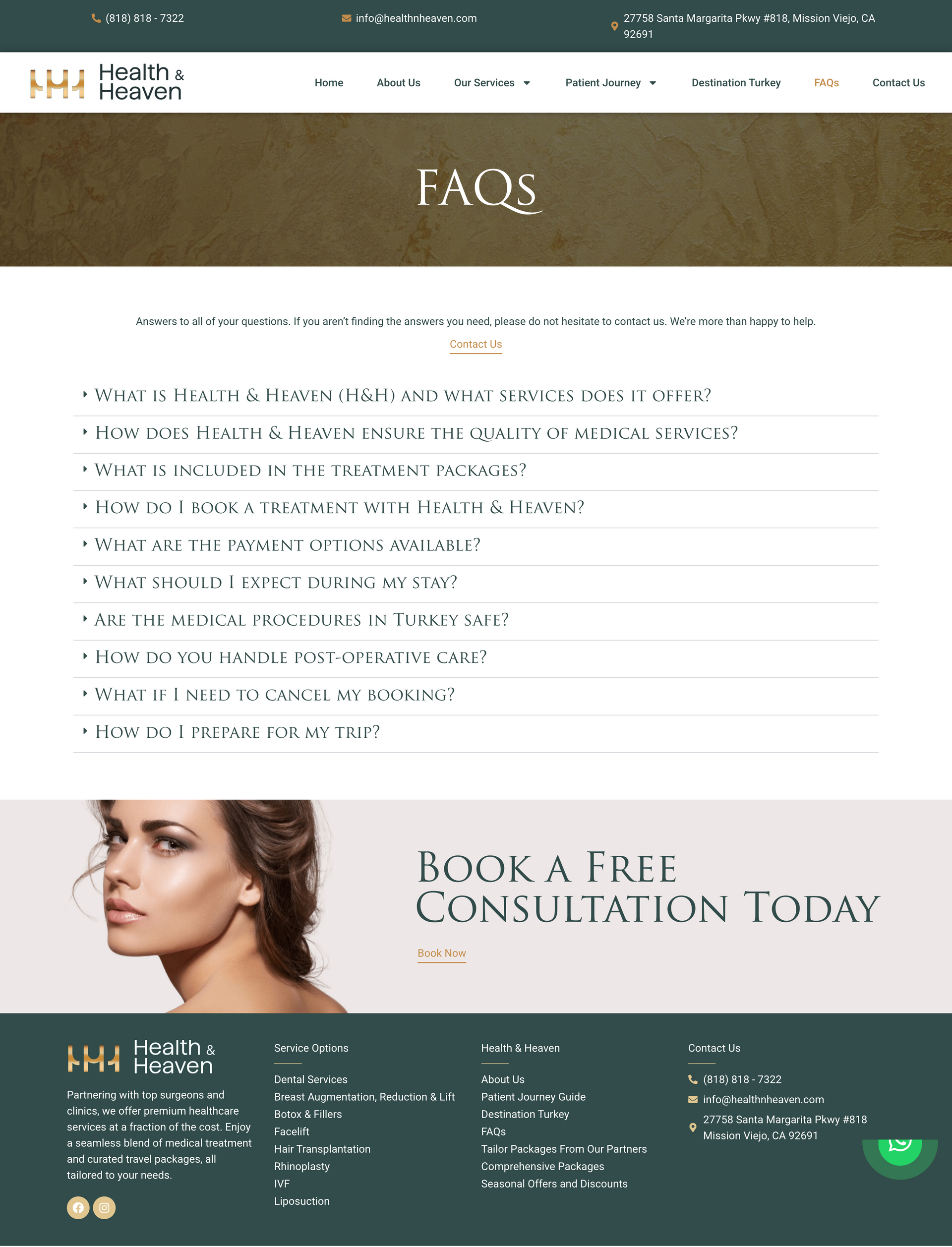
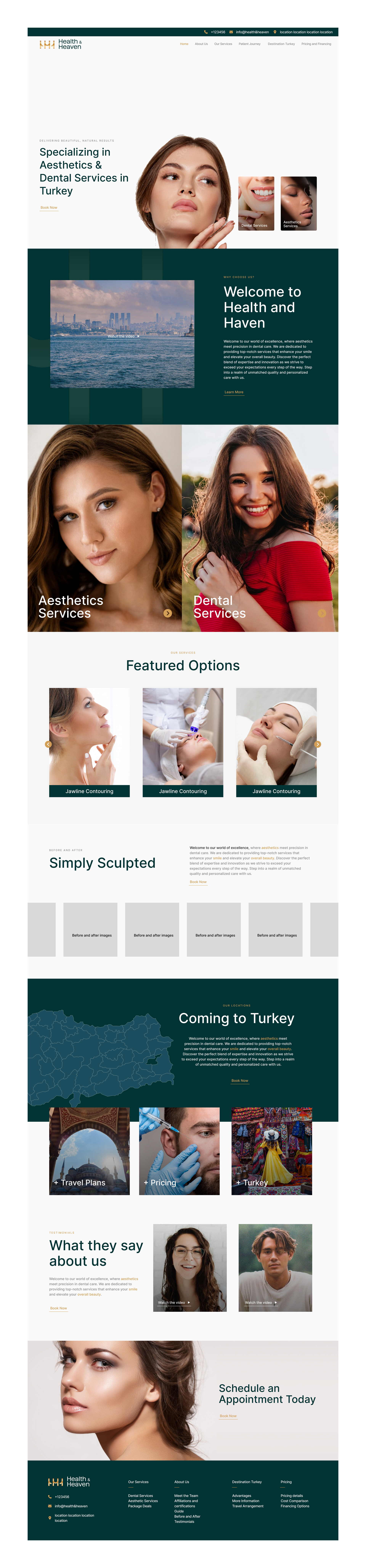
Prototype & Build: Low-fi → hi-fi wires; plain-language copy tests on a clickable prototype; shipped MVP (FAQ, Patient Journey Guide/Timeline, proof/policy blocks, tone & type, IA & key pages).
Method note: AI-assisted clustering helped group interview transcripts and spot themes; humans handled coding, conflict resolution, and final synthesis.
Why archetypes (not personas)? I use practice-based archetypes tied to behaviors, constraints, and channel realities—avoiding fictional profiles and keeping decisions grounded.

Five Archetypes
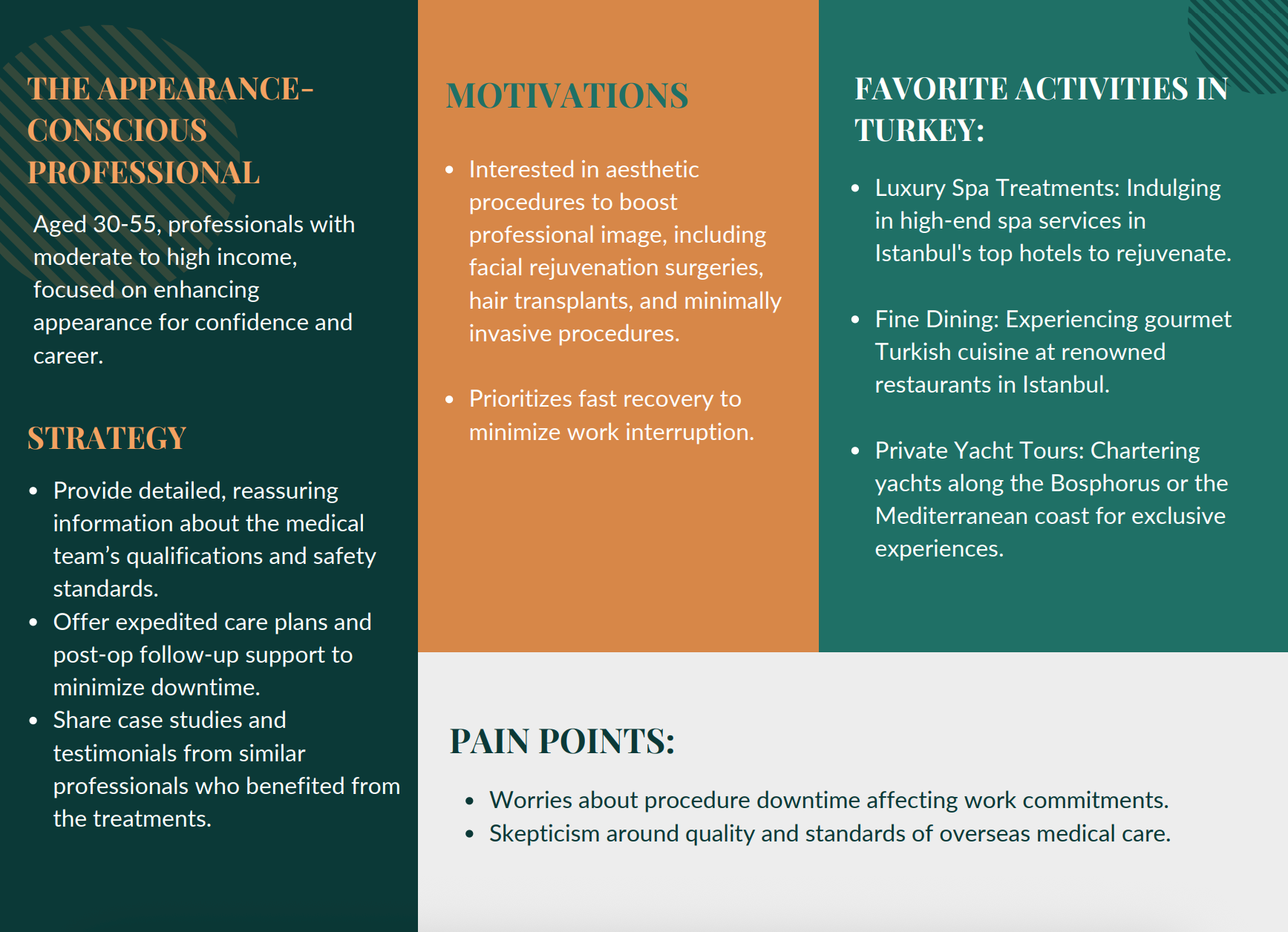
Appearance Conscious Professional
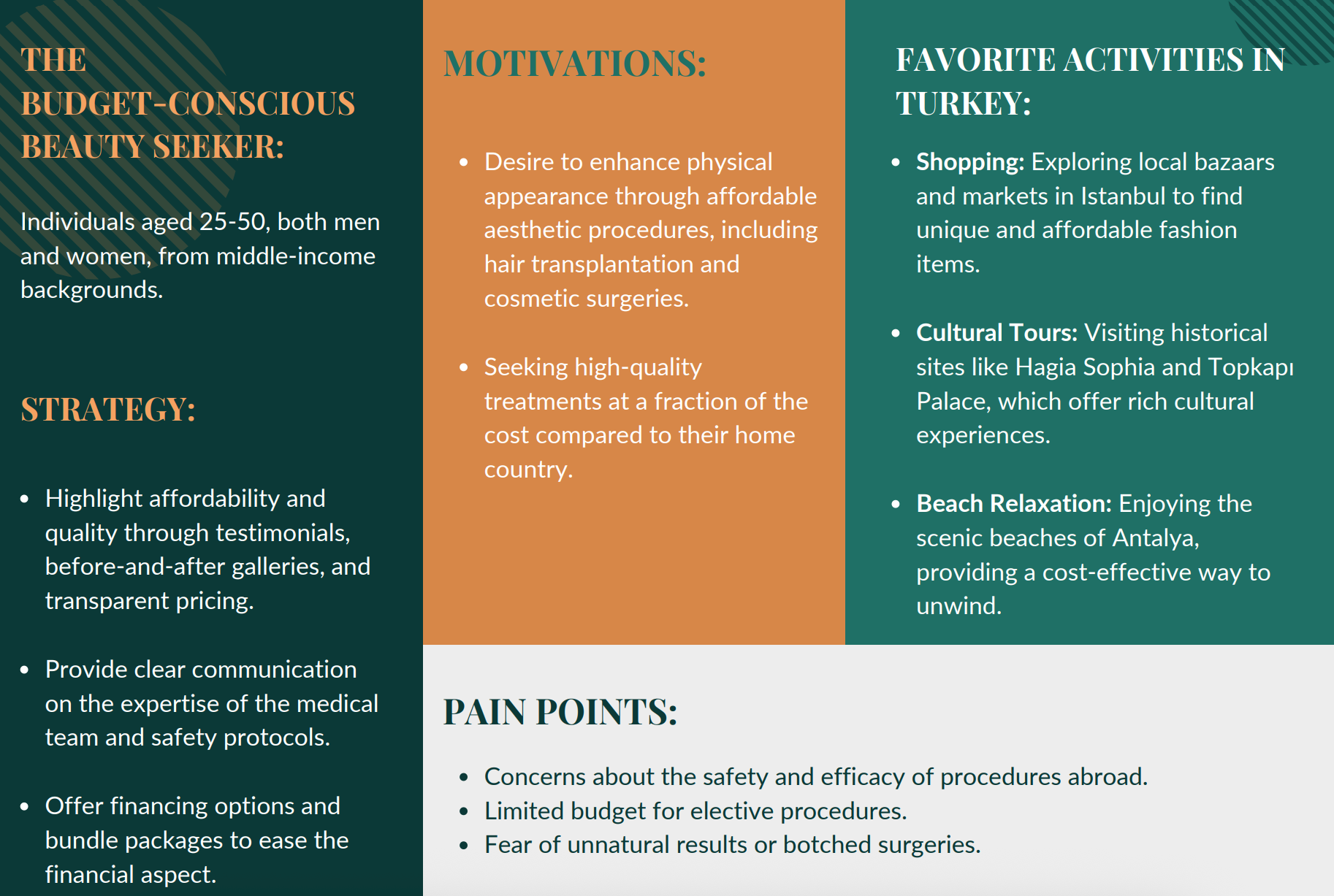
Budget Conscious Seeker
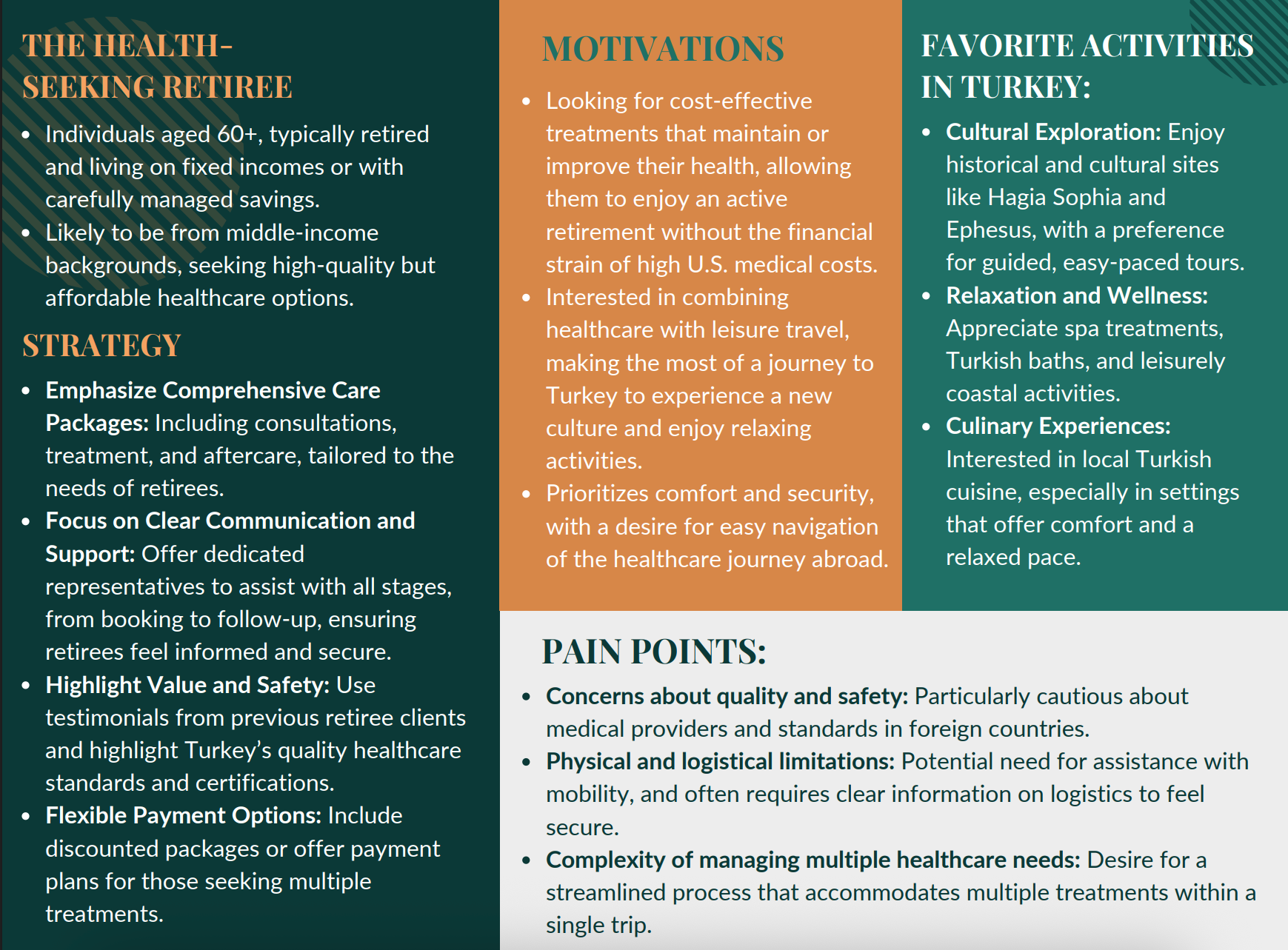
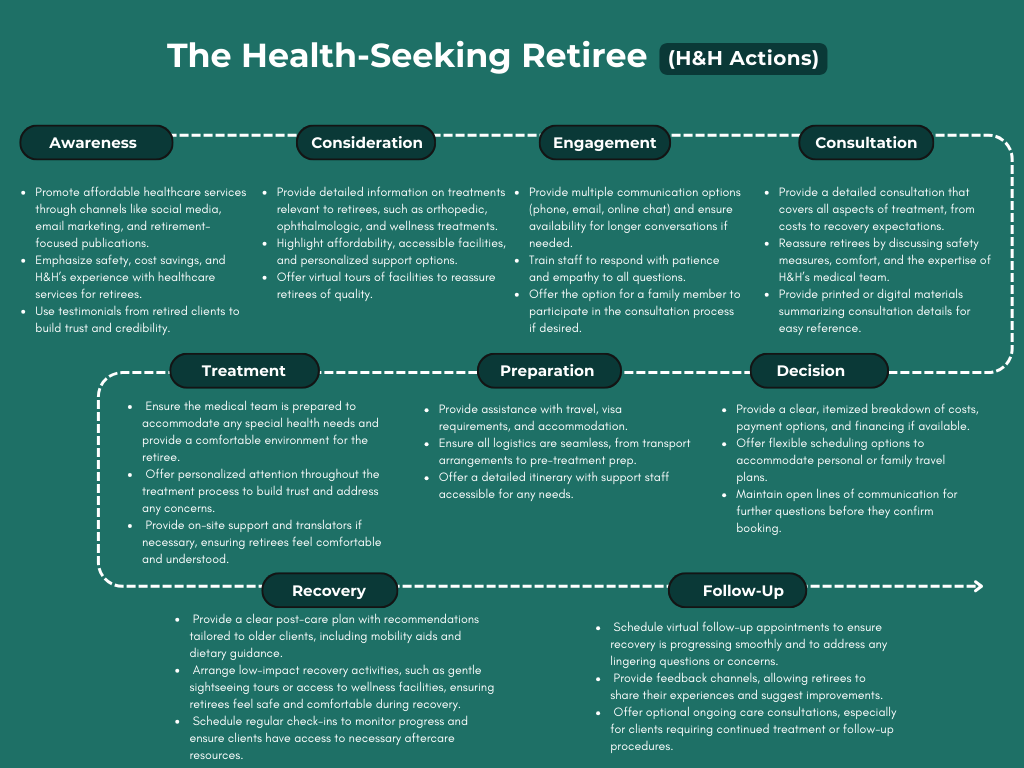
Health Seeking Retiree
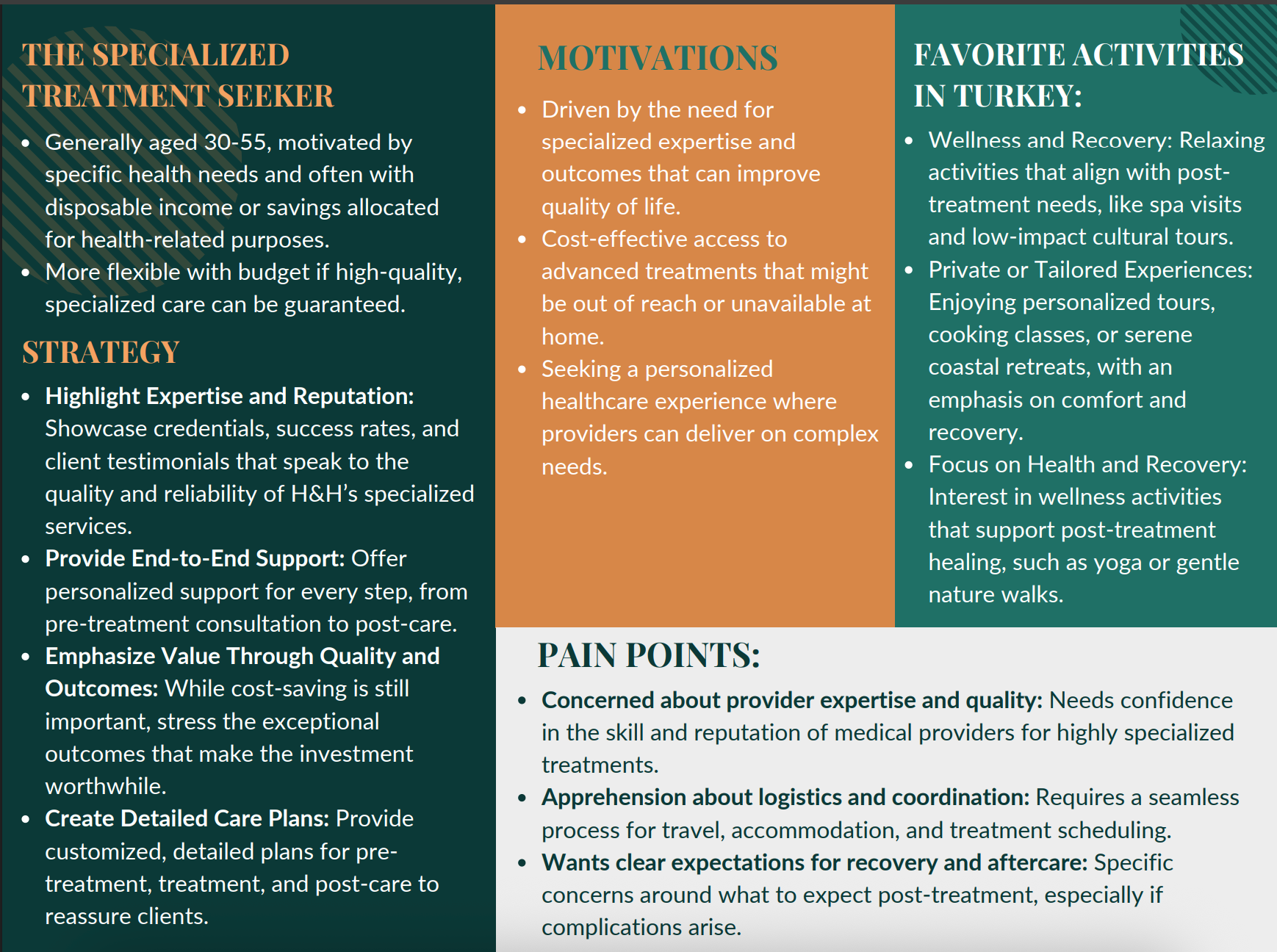
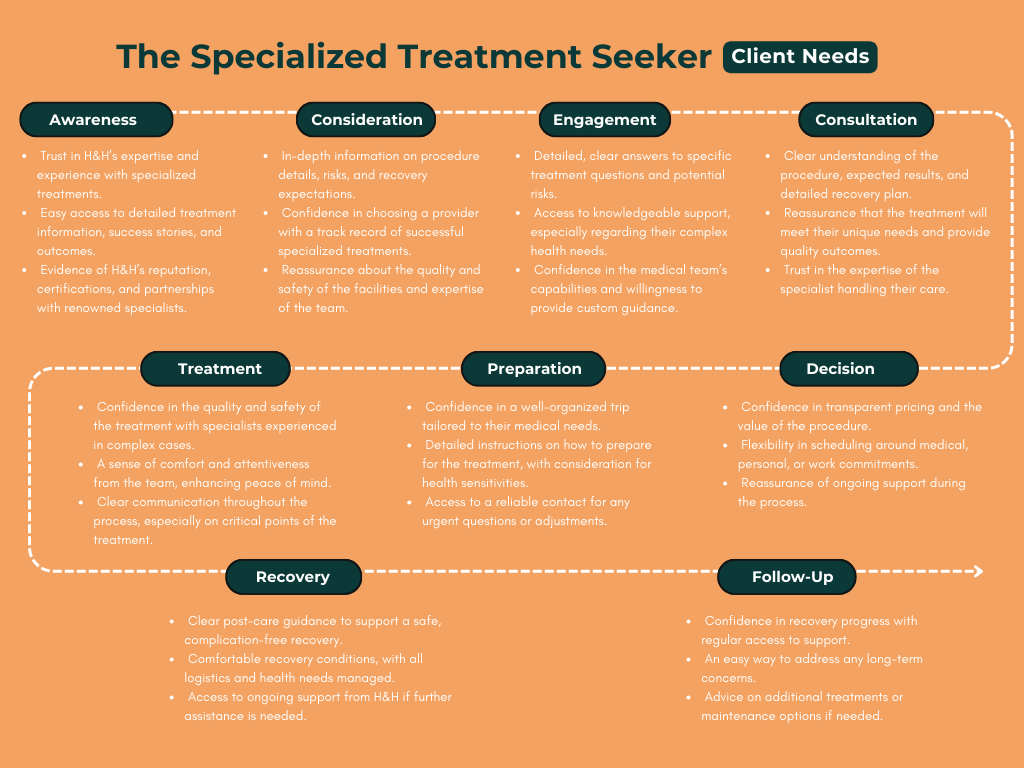
Specialized Treatment Seeker
Cosmetic Tourism Enthusiast
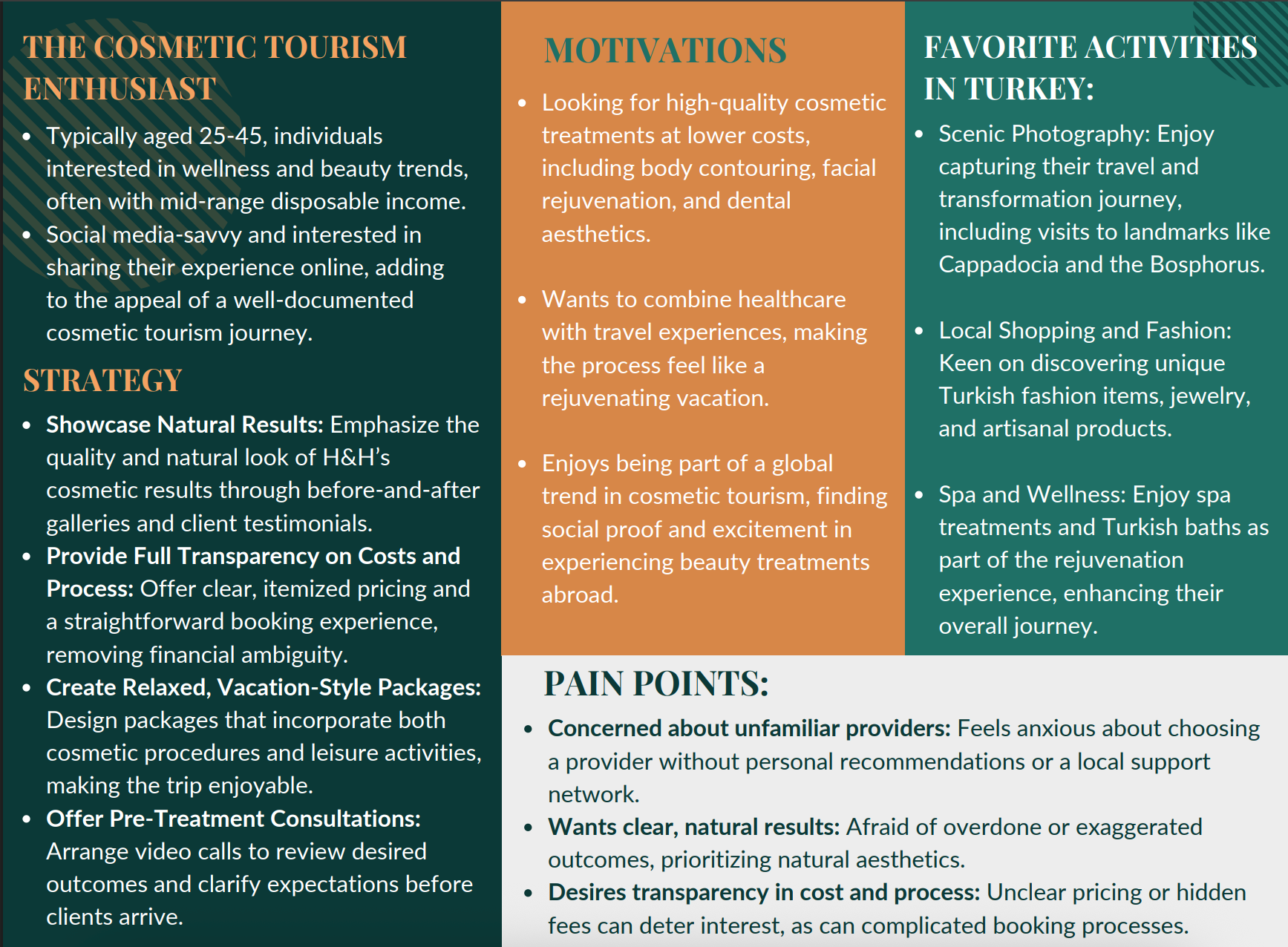
For each archetype, I produced two practical outputs and a light journey view for each:
- Client Needs : Showing the jobs, risks, and trust signals this archetype looks for (plain language, no fiction).
- H&H Actions : Determining what we changed or shipped for them: content/modules, placement, tone, and any ops hooks.
- Composite Journey: As a concise path from awareness → decision → follow-up, highlighting hesitation points and where our modules appear.
This structure kept research close to decisions: every “need” maps to a specific action (e.g., a credential card, a cost-range table, or a policy preview), and every action is anchored to a journey moment we can measure.
Client Needs
HnH Actions
From Insight to Action
I translated research into a phased plan the team could ship against. Three lenses kept us honest:
Agile sprints for delivery pace,
MoSCoW for “what matters now,” and an
Eisenhower matrix for urgency vs. importance—each item traced back to an archetype need and a journey moment.
MoSCoW
Must / Should / Could / Won’t
I ranked initiatives by impact on
trust and delivery effort, mapping each item to an
archetype and a
journey moment.
- Must: partnership proposals, VIP package + confidentiality, transparent education for Budget-Conscious; credential/proof blocks for Specialized Treatment.
- Should: collaboration roadmap, testimonials/info packs.
- Could: joint marketing, events/video.
- Won’t (now): rebuild pricing; redesign feedback.
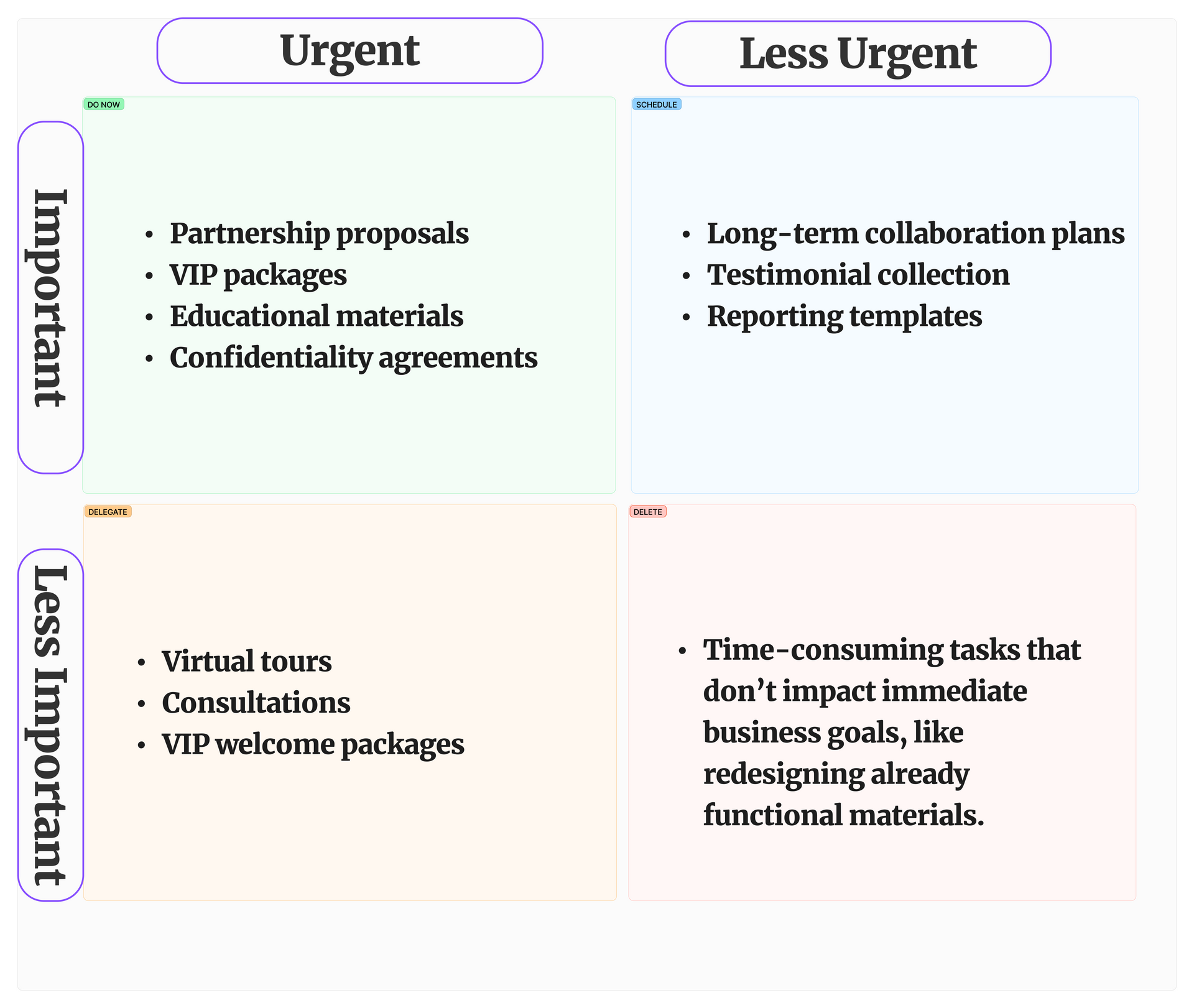
Eisenhower Matrix
Urgent × Important
I sequenced work by
impact on trust and
time sensitivity.
- Do First (Important & Urgent): partnership proposals, VIP packages + confidentiality, educational materials.
- Schedule (Important, Not Urgent): long-term collaboration plans, testimonials/info packs.
- Delegate (Urgent, Less Important): virtual tours, VIP welcome gifts.
- Eliminate: rewriting finalized templates; redesigning the feedback process.
Agile Sprints
S0 - Foundations
IA, tone/typography, trust content model
Badges:
All archetypes
• Global
S1 - FAQ MVP
Top questions, plain language
Badges: Budget-Conscious
• Pre-consult
S2 - Journey Guide / Timeline
Safety, logistics, aftercare
Badges: Retiree
• Pre-travel
S4 - Cost-range & Payment
Procedure + travel + extras; payment clarity
Badges: Budget-Conscious
• Pre-consult
S5 — Ops & Governance
Owners, ≤90-day content reviews, coordinator macros
Badges: Ops
• All stages
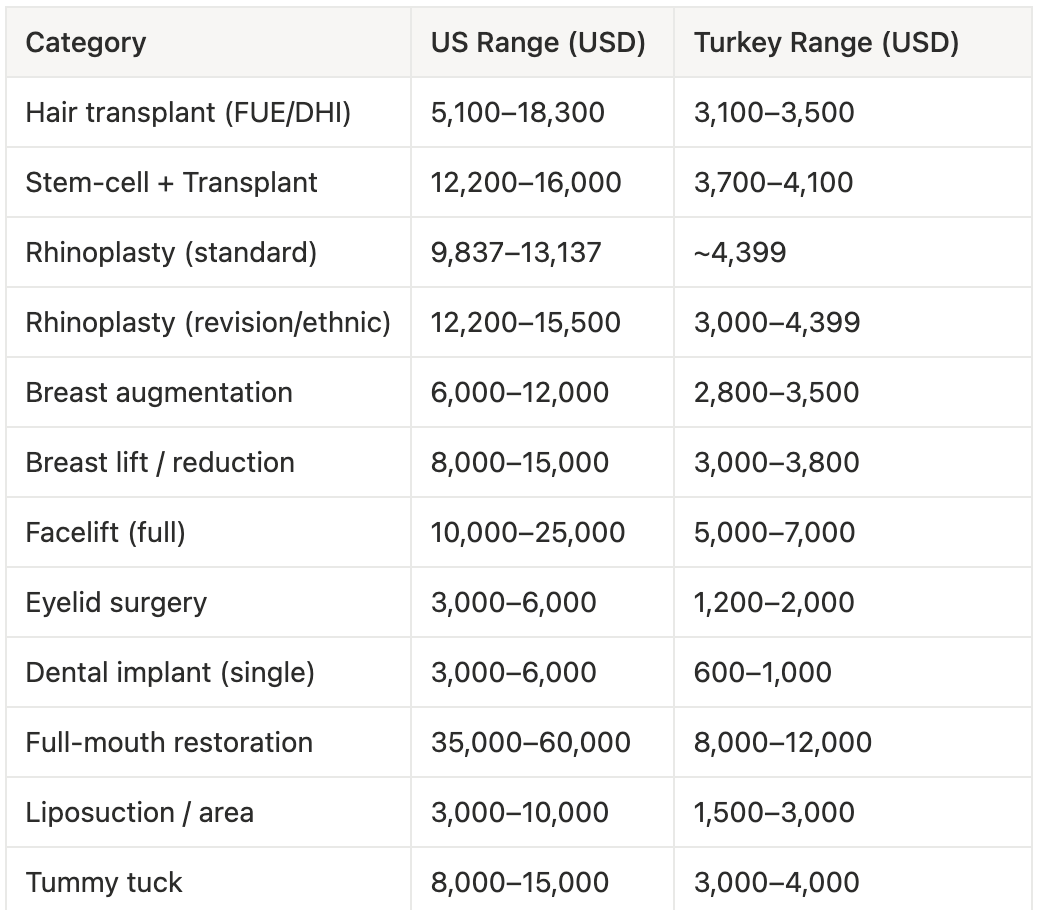
Compiled from public clinic price sheets and aggregator listings (Q2–Q3 2025).
Ranges are indicative; actual costs vary by provider, case complexity, and add-ons. Used for positioning not medical/financial advice.
Market Positioning with Data
What the data says
Across procedures, compiled price scans show Turkey at roughly
40–70% lower than typical US ranges while adhering to international clinic standards. Users still hesitate on
total cost and
what’s included.
Positioning decision
Lead with
transparency + total-journey clarity (not “cheap”): show
range tables + “included/excluded” lists, and surface
payment & privacy options before chat hand-off.
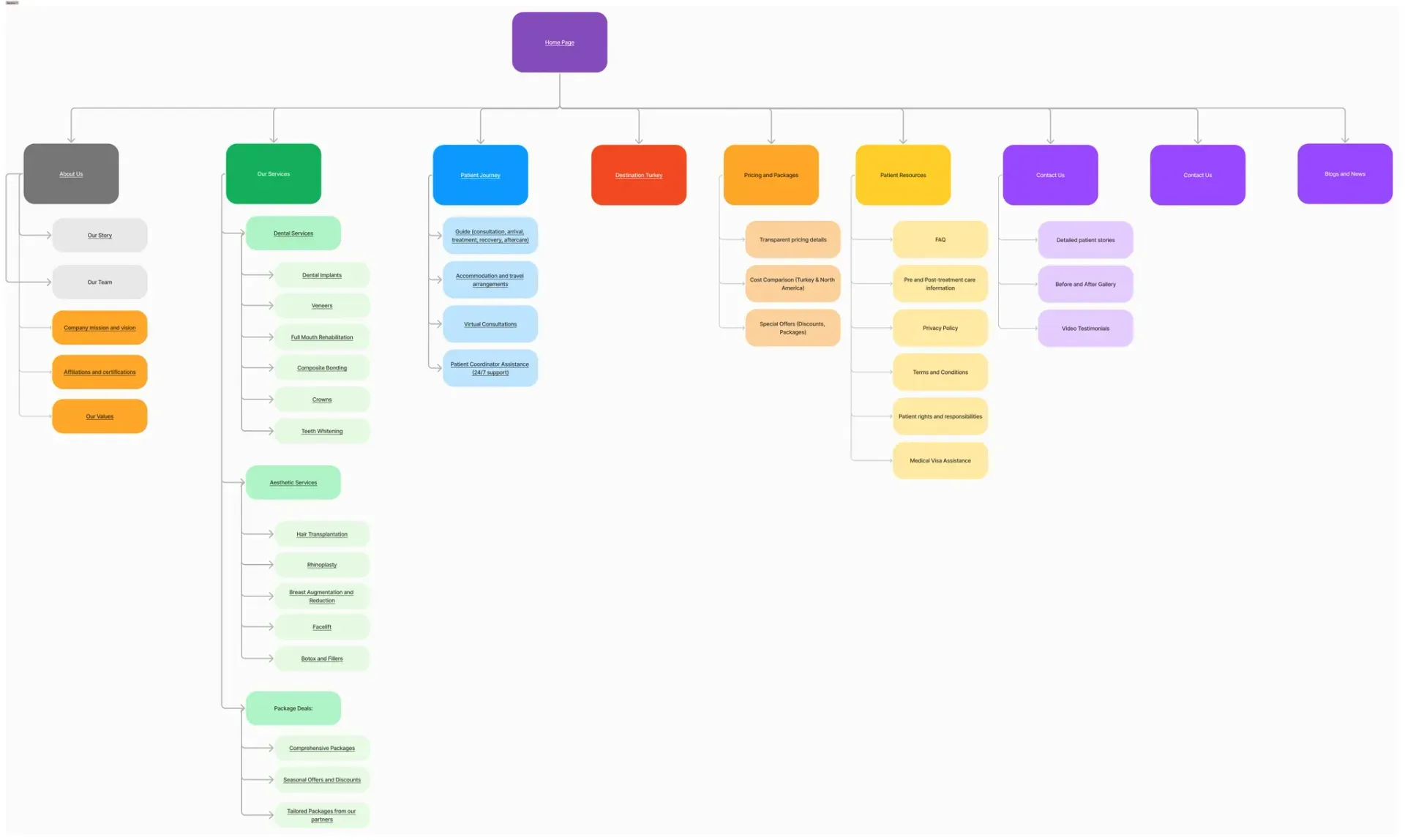
Information Architecture
Interviews surfaced hesitation around cost, safety/credentials, and aftercare logistics. I reorganized the site so trust-critical content appears before chat/CTAs and is easy to reach for each archetype and journey moment.
IA decisions
- Promoted to primary nav: Guide/Timeline, FAQ, Pricing & Inclusions, Credentials & Policies.
- Placement rules: Credential card above the fold; policy previews adjacent to CTAs; cost-range tables on all relevant treatment pages.
- Cross-links: Each trust page links to Remote Consult for a clear next step.
Routing by need
- Budget-Conscious Seeker → Pricing & Inclusions → FAQ → Remote Consult.
- Specialized Treatment Seeker → Credentials & Policies → Remote Consult.
- Health-Seeking Retiree → Guide/Timeline (travel, recovery, support) → Remote Consult.
- Appearance-Conscious Professional / Cosmetic Tourism Enthusiast → Guide/Timeline + recovery expectations → Pricing & Inclusions.
- Before → After (two examples)
Before: Pricing only after contact; no “what’s included.”
After:
Pricing & Inclusions page in nav + included/excluded tables on treatment pages.
Before: Policies buried in footer.
After: Policy preview chips (consent, privacy, aftercare) next to CTAs on decision screens.
Outcome target: Shorter paths to reassurance content and fewer pre-consult messages on cost/safety/aftercare.